

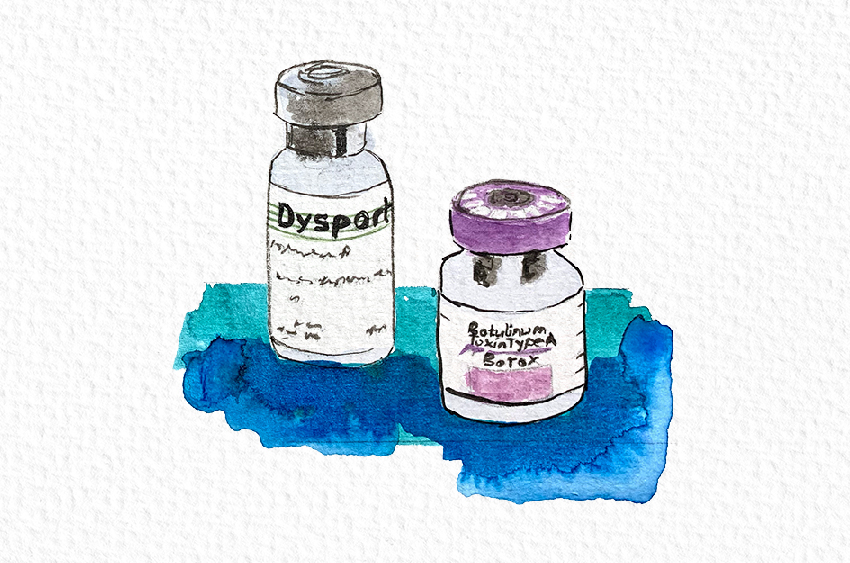
Botulinum toxin is a toxin produced by the bacterium Clostridium botulinum. This toxin inhibits the release of substances from nerve endings that cause muscle contraction, preventing muscle contraction. This mechanism causes either no or minimal muscle contraction in the area where it is applied. This effect is completely specific to the nerve to which it is applied, and therefore to a single area.
Botox can be applied to many areas, depending on the need. Applying it to the facial muscles—the forehead, the middle of the eyebrows, or the crow's feet—can help prevent wrinkles caused by these muscles. Applying it to the corners of the mouth can help prevent a sad appearance. Gum visibility caused by smiling can be reduced. Bands in the neck can be prevented. Applying it to the jaw muscles can prevent or alleviate teeth clenching. Additionally, applying it to specific points on the scalp can reduce the severity of migraine headaches and even prevent attacks altogether in some patients. Applying it to the armpits, palms, and soles can also address excessive sweating.
First, a detailed examination is performed. A treatment plan is then developed based on your needs and the doctor's preferences. Before each treatment, photos and a video of you are taken. Local anesthetic cream is then applied to the treatment area and you wait 20-30 minutes. The procedure is performed using very fine needles called microfine needles, making the treatment painless. Those with increased sensitivity to pain may experience a slight stinging sensation, which subsides within a few seconds. Following the treatment, ice is applied for 5-10 minutes. The effects begin to be felt after 3-4 days and take up to 10 days to fully heal. At a follow-up visit 10 days later, touch-ups are performed if necessary.
First, a detailed examination of the area where Botox will be applied is performed. During this examination, your doctor will determine the amount of Botox to be administered, taking into account the strength of the muscle in the area and your expectations for the procedure, while remaining within safe limits.
Makeup is not recommended for up to two hours after the procedure. On the same day, it is recommended to avoid very hot environments such as saunas or Turkish baths, facial massages, or excessive bending over. Strenuous exercise should be avoided on the same day.
The patient can return to normal life the next day.
There may be minimal swelling and bruising at the injection site. This usually subsides within a week.
Minimal asymmetries may occur in the application area. These can usually be corrected during retouching. Rarely, drooping of the upper eyelid may occur. This can be treated with eye drops. All side effects of Botox are reversible.
As with all cosmetic procedures, a person must be at least 18 years old to receive Botox. However, most people don't need Botox at this age. Those who have no wrinkles at rest but begin to develop them with facial expressions may be eligible for Botox. This typically begins around age 25-30.
Although it is recommended that you be over 18 years of age for sweating Botox, it can also be applied at an earlier age.